
Where is Your Temple?
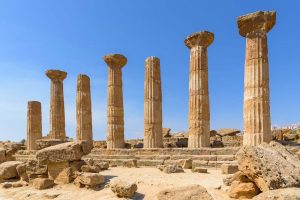 (Read 2 Samuel 7 and 1 Chronicles 17)
I’ve had many conversations about religion and spirituality with people in my life. I don’t always think fast enough to articulate my views effectively. Needless to say, I’m not the best Apologist for the Christian faith. A close friend of mine said it’s usually better to find a point of understanding and ask questions rather than blasting someone with biblical quotes or mandates. That would turn me off, and I’m a believer.
A good chunk of my extended family are somewhat spiritual yet many are not convinced that there is a loving creator God and Savior. Arguments about slavery, polygamy, misogyny, and cultural differences always arise. Even topics as basic as church practices, sacrifices, and Biblical accuracy come into play. Most major religions have some incredible physical example they can point to as a source of inspiration, hope, and pride. Muslims have Masjid al-Haram, Buddhists have Borobudur, Jews have the Dohany Street Synagogue, and Christians have St. Peter’s Basilica. Living outside of Washington, DC, I always marveled at the majesty of The Mormon Tabernacle off of the Capitol Beltway. As a child, I will never forget the feeling of awe and splendor from St. Patrick’s Cathedral in New York City.
That night the LORD told Nathan, “Go, tell my servant David: ‘This is what the LORD says: Do you really intend to build a house for me to live in? I have not lived in a house from the time I brought the Israelites up from Egypt to the present day. Instead, I was traveling with them and living in a tent. Wherever I moved among all the Israelites, I did not say to any of the leaders whom I appointed to care for my people Israel, “Why have you not built me a house made from cedar?”‘
(2 Samuel 7:4-7)
David felt it was his duty to build a house for God. But God is telling David that He doesn’t need a “house.” God started His relationship with the people of Israel living in a tent. He traveled with them throughout their journey. God also desires to live with us through our joys, successes, and pain. He shows His love by being with us throughout our journeys. Sometimes He even allows us to fail because he wants us to seek joy in Him, not in our successes.
We also learn from this story that God wants us to give, to give freely. It has been estimated by some that David gave somewhere in the neighborhood of $30,000,000, by today’s standards, for the temple to be rebuilt. It was near the end of his life and many scholars believe that David was giving from his means not his excesses. David’s heart was in the right place and gave out of his desire to please God. We’re supposed to give, not to prove our value to God, but rather we give because of what he’s already done for us.
David’s son Solomon, not David, would rebuild the Temple.
When the time comes for you to die, I will raise up your descendant, one of your own sons, to succeed you, and I will establish his kingdom. He will build a house for my name, and I will make his dynasty permanent. I will become his father and he will become my son. When he sins, I will correct him with the rod of men and with wounds inflicted by human beings. But my loyal love will not be removed from him as I removed it from Saul, whom I removed from before you. Your house and your kingdom will stand before me permanently; your dynasty will be permanent.’”
(2 Samuel 7:8-16)
Solomon has been known as one of the richest humans to ever walk the earth. He lived a privileged life to say the least. He also sinned against God in a multitude of ways. Eventually, because of Solomon’s sins, the Kingdom of Israel that David unified, would be divided by civil war. Solomon was punished and eventually after a few hundred years, his lineage to the kingship would end.
As promised, Solomon would build the temple where the Lord would dwell with His people, and David’s throne would be established and would last forever. People get caught up in the meaning of this verse, “When he sins, I will correct him with the rod of men and with wounds inflicted by human beings.” Wait, how can this be a Messianic prophecy pointing to Jesus Christ, while at the same time mentioning his sins? Jesus didn’t sin.
There is a dual reference from God here. There is the immediate throne of Solomon that would be an epic majestic one but would eventually sin and be punished. There would also be a throne promised to David, that would be established and last forever. History has seen the rise and fall of many kingdoms and none last forever. Israel experienced the blessings of God’s rule for a short time during David’s reign, but the full blessing of God’s Kingdom is only found in Jesus Christ.
Jesus is the fulfillment of this promise. He was born from David’s royal line and remains on the throne forever. Solomon built the temple that ended up in complete destruction by Nebuchadnezzar II, king of Babylonia. The next temple would be rebuilt, and in Jesus’ day was known as “Herod’s Temple.”
One day, while in Herod’s Temple, Jesus said, “Destroy this temple and in three days I will raise it up.”
(John 2:19)
Those who heard Jesus say this thought He was referring to Herod’s temple, but Jesus was talking about the temple of His body. God does not solely dwell in spectacular temples with four walls, stained glass, and flying buttresses made with human hands. Don’t get me wrong, the impressiveness and grandeur of these Cathedrals, Mosques, and Temples is hard to imagine. I love architecture. The beauty of these sites is a testimony to human ingenuity, creativity, and effort. A key factor to remember though is that God came to earth to dwell among His people in the person of Jesus Christ. As strong as these buildings are, they will eventually crumble. In His promise to David, God told him that the only kingdom that will last forever is the one He built.
They replied, “It has taken forty-six years to build this temple, and you are going to raise it in three days?” But the temple he had spoken of was his body. After he was raised from the dead, his disciples recalled what he had said. Then they believed the scripture and the words that Jesus had spoken.
(John 2:20-22)
Over time, our careers and our bodies will fail us. We aren’t taking anyone with us when we go. Jesus is the only thing that can, has, and will last forever. Those of us who trust and believe in Him will dwell in His kingdom for all eternity. My temple is a lot bigger than any building I could ever visit. My temple is greater than anything that could be made by even the most generous human hearts. My temple comes in the hope of my Savior Jesus. My salvation isn’t about me doing something for God, it’s about being awed by his greatness and recognizing what He’s done for me. Just like the most glorious Churches ever made, my life should show unmistakable evidence of God’s greatness.
My sins are forgiven, the sacrifice has been paid, and my hope rests in the never ending temple of Jesus Christ.
The Lord is my shepherd; I shall not want.
He maketh me to lie down in green pastures: he leadeth me beside the still waters.
He restoreth my soul: he leadeth me in the paths of righteousness for his name’s sake.
Yea, though I walk through the valley of the shadow of death, I will fear no evil: for thou art with me; thy rod and thy staff they comfort me.
Thou preparest a table before me in the presence of mine enemies: thou anointest my head with oil; my cup runneth over.
Surely goodness and mercy shall follow me all the days of my life: and I will dwell in the house of the Lord for ever.
Psalm 23
Key Applications:
- Jesus invites us to be a part of His kingdom. He wants our help in building this temple. We can do this by showing others the glory of Jesus within us.
- When we show others who we are, we should demonstrate God’s glory and majesty, not our own.
- When we are motivated to give, we shouldn’t give boastfully. Don’t expect payback or favors. God doesn’t need our giving, He wants a giving heart.
Where else in your life can you live out the teachings of Christ? Look for next week’s Devotion.