
(Read Acts 9)
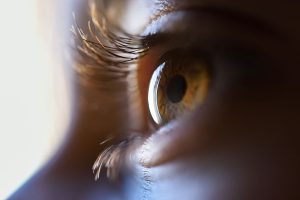 If you were to take a poll, most people would categorize themselves as “good people.” I don’t know if that’s denial or optimism. Being classified in that category requires defining what being good means. After all, none of us want to consider the fact that we’re all sinners. Most of the Christians I know recognize how far we are from being “good.”
There is no difference between Jew and Gentile, for all have sinned and fall short of the glory of God, and all are justified freely by his grace through the redemption that came by Christ Jesus.
Romans 3:22-24
In Paul’s writing to the Roman church, he starkly compared God’s glory to ours, pointing out that apart from the grace of Jesus, we don’t have any. Even the holiest, most righteous Christian has sinned. Paul zoomed in on this by stating that all humans, regardless of everything, have sinned and fall short of the perfect standard of God’s glory. Paul echoed the universal condition of our moral failure and need for salvation. He added that our righteousness, or being in right standing with God, is not achieved through adherence to the law or one’s own efforts but through faith in Jesus Christ, which is offered freely to anyone who believes in Jesus.
There are many things I’ve done in the past that I wish I could change or erase. I know I’ll do many more in the future. No amount of “I’m sorry” will suffice. Only God can erase these wrongs. According to Paul, we have been made right thanks to Christ’s blood, and Mark Twain’s favorite two words come to light: “Not guilty.”
Interestingly, Christians don’t spend much time pondering our own goodness. There is only one goodness, and that’s the goodness of God. But there is one area I think we spend time in: our relationship with Jesus. Do we know Him? More importantly, does He know us? If we’re not spending time there, we must ask ourselves why not? What are we afraid of? I go through seasons when I feel like I can see the sparkle of his glory yet other times He’s just words on a page. For many years as a Christian, I never questioned my relationship with Jesus. I just assumed I had one. I did Christian-like things and walked upright in my mind, but I never bothered to ask Jesus, do I see you?
Paul was the cream of the crop in his Jewish circles. He was steeped in history, laws, and Jewish tradition. He wielded a lot of power. To the people of “the Way”—the Christians—he was a monster. In Paul’s own mind, he was better than good. He was a righteous man doing things for God. We go through life like this, too, until one day, we don’t.
As he neared Damascus on his journey, suddenly a light from heaven flashed around him. He fell to the ground and heard a voice say to him, “Saul, Saul, why do you persecute me?”
“Who are you, Lord?” Saul asked.
“I am Jesus, whom you are persecuting,” he replied. “Now get up and go into the city, and you will be told what you must do.”
Acts 9:3-6
When I read this passage earlier in the week, I took my neon yellow marker and highlighted, “He fell to the ground.” There is no mention of a horse in his travels here, so it’s not like he fell off something. Maybe he fell out of fear or shock. Seeing a light brighter than anything else in the natural world would be terrifying. I believe that Paul fell out of reverence upon encountering the overwhelming presence of God. His falling symbolized Paul’s submission to the authority of Jesus Christ, the moment of surrender and recognition of Jesus as Lord, despite Paul’s previous hostility towards Jesus and his followers. Confronted with the reality of his persecution of Jesus and his followers, he was slammed with a profound sense of humility and repentance.
Paul didn’t know it yet, but this encounter blinded him. His physical blindness was a direct message from Christ about Paul’s spiritual blindness. The temporary physical blindness symbolized the need for Paul to recognize his spiritual condition and receive spiritual sight through his encounter with Jesus.
A friend of mine who is a former Muslim said, “When I accepted Jesus Christ, all my hatred toward Him and anything to do with Him melted away. Then I realized that He is everything that I ever needed.”
Before his conversion, Paul thought he was doing the LORD’s work. He thought he could see. Jesus showed him otherwise. He does this to us every single day. If you cruise through your life with no red lights or speed bumps, no knocks, and no dings, that’s when you have to worry. Jesus wants our attention. He will put obstacles in our way. He wants to remove the blinding distractions from our lives. He wants us to see.
My friend (B) said, “Most recently, during my quiet and private walk with the Lord, I stopped to do my prayer list and couldn’t open it. Then I heard God say, ‘Uh hello, remember it’s me and you today.’“
Then Ananias went to the house and entered it. Placing his hands on Saul, he said, “Brother Saul, the Lord—Jesus, who appeared to you on the road as you were coming here—has sent me so that you may see again and be filled with the Holy Spirit.” Immediately, something like scales fell from Saul’s eyes, and he could see again. He got up and was baptized, and after taking some food, he regained his strength.
Acts 9:17-19
In his exposition on this text, Charles Spurgeon wrote, “Scales which men do not perceive.” As I read deeper into his message, I felt a keen sense of remorse and humility. He’s writing about me, I thought. In all actuality, he was writing about all of us. We all have scales blocking our sight on the inside, and it’s not until Jesus moves them to the outside that we can know our blindness. Spurgeon’s message opened my eyes (excuse the pun) to yet another side of this story. I have always wondered what it would be like to have “scales” fall from my eyes so I can see, but now I wonder, why was I blind in the first place? What was I blinded to?
By finally seeing his spiritual blindness and the grace, glory, and mercy of Jesus Christ, Paul’s conversion catalyzed his transformation from a persecutor of Christians to one of the foremost proponents of the Christian faith. God uses every one of us in ways we sometimes see and some we’re blind to. God used Ananias who, like Moses, was reluctant to obey Him at first. But ultimately following God’s command, he became a human conduit to the scales falling out of Paul’s eyes. Ananias demonstrated remarkable and risky obedience to the Lord’s command to go to Paul.
What’s the first thing Paul did after his conversion? Three days without food or water, and then before anything else, he got Baptized. This public act of faith symbolized his conversion to Christianity and his commitment to follow Jesus as his Lord and Savior. Then he ate.
Another friend, (J) said, “Although I never remember being blinded to Jesus, I will say when I was wheeled into and woke up from surgery, I knew that He was with me. I was never worried at all.”
(A) told me, “I was in a bad car wreck at the age of eighteen, and the sunrise the next morning was like seeing it for the first time. As a very young boy, I also remember singing “Jesus Saves” as my Grandfather served as the associate pastor.”
My friend (L) mentioned, “When I first accepted Jesus as my Lord and Savior and was Baptized, it was all so underwhelming, but I just stayed the course, and slowly but steadily, my vision got better. I definitely can look back and see where he was with me even before I acknowledged him, so I’m better at hindsight than I am at noticing him in my daily walk.”
I loved her quote because the process of our seeing doesn’t matter. Some people, like Paul, were blinded by light, heard a loud, somewhat angry Jesus, and could see. Most of us have a more gradual experience, but we’re always developing new blinders to be aware of. There’s an expression, “Life gets in the way.” Well, duh, of course it does. It gets in the way to make us see better and connect us more closely with Jesus and His truth.
“Then I took Him for granted,” my friend (D) said. “So He allowed things to happen to me, where my only way out was for Jesus to remove the scales again and bring me back to His love and tender mercy. Now, I know for sure that He loves me unconditionally and that I mean a lot to Him.”
On our last full day, while visiting our daughter in Colorado, I spent the afternoon in the ED. My wife was kind enough to watch her puppy, so my daughter, also an ED nurse, stayed with me. It wasn’t what I wished for on our last day, but I felt a new closeness with her that I hadn’t experienced in a long time. I saw her differently, clearer. I saw Jesus clearer, too. When the Doctor walked in with the CT scan results, I wasn’t worried. I didn’t have to take that big, deep breath. I had already laid it all in Jesus’ hands.
Two days ago, a home nearby burned to the ground. The family was safe, but they lost their pets. I can’t imagine going through that trauma in my life. But when we’re sitting in multiple traffic jams, whining and moaning about the inconvenience, God wants us to look out and up. He wants us to focus on Him, not us.
Then the church throughout Judea, Galilee and Samaria enjoyed a time of peace and was strengthened. Living in the fear of the Lord and encouraged by the Holy Spirit, it increased in numbers.
Acts 9:31
What happened when scales fell out of Paul’s eyes? He converted. He became a missionary for Christ. Most scholars believe he penned thirteen or fourteen of the books in the New Testament. Paul went from a Christian persecutor to a Christian evangelist. What happened when scales fell from his eyes? He got Baptized, went on mission, and the church grew.
Amazing grace! How sweet the sound
That saved a wretch like me!
I once was lost, but now am found;
Was blind, but now I see.Through many dangers, toils and snares,
I have already come;
‘Tis grace hath brought me safe thus far,
And grace will lead me home.
Amazing Grace – John Newton
Key Applications:
- God’s Grace is for Everyone. Even Paul, a persecutor of Christians, became a powerful apostle.
- Be open to God’s voice. Paul was receptive to God’s message, even though it contradicted his core beliefs. We should be open to hearing God’s will.
- Obedience is Key. Despite his initial blindness, Paul followed God’s instructions. Ananias took the risky steps to be obedient to God’s voice, and because of that, the scales fell from Paul’s eyes. Obedience is crucial in our Christian walk. How can you be more obedient this week?
Where else in your life can you live out the teachings of Christ? Look for next week’s Devotion.