
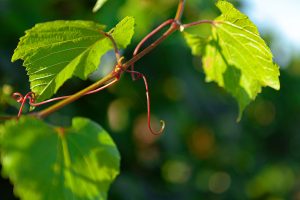
 (Read John 15)
Atticus Finch, the protagonist in Harper Lee’s To Kill a Mockingbird, once said something that has been adapted and retold countless times: “You can choose your friends but you sho’ can’t choose your family, an’ they’re still kin to you no matter whether you acknowledge ‘em or not…” It’s a simple, almost silly statement, but it rings true. There are friends in my life who feel as close as family. We may not share DNA or parents, but it’s as if we’ve been grafted into the same family. Similarly, every human being on Earth is a child of God, but it’s not until we accept Jesus into our lives that we become part of God’s family.
God uses simple words and vivid illustrations throughout the Bible to convey timeless truths. One of the most powerful metaphors is that of the vine, representing spiritual growth, fruitfulness, and even judgment. In the Old Testament, the vine often symbolizes Israel—an agrarian society where vines were an essential and familiar part of daily life.
A healthy vine produces abundant fruit, reflecting Israel’s potential to be a fruitful nation—blessed by God and a blessing to others. However, when Israel turned away from God, it was likened to a wild or unproductive vine, failing to bear good fruit.
Noah, a man of the soil, proceeded to plant a vineyard.
Genesis 9:20
This verse marks the beginning of a new chapter in humanity’s story, symbolized by Noah’s life after the flood. Having survived the devastation, Noah and his family were entrusted with the responsibility of repopulating and cultivating the earth. Planting a vineyard marked a return to normalcy, representing abundance, peace, and the establishment of a new way of life.
My takeaway from this verse is that God intended good to come from His vine—indeed, from all vines! The metaphor of the vine becomes significant throughout the Bible. In the Old Testament, it symbolizes Israel, whom God carefully planted and nurtured like a prized vine. In the New Testament, Jesus is revealed as the true vine, drawing on this agricultural context to teach profound spiritual truths.
This imagery emphasizes God’s special relationship with Israel and His deep investment in them, highlighting His desire for fruitfulness and faithfulness.
“I am the true vine, and my Father is the gardener. He cuts off every branch in me that bears no fruit, while every branch that does bear fruit he prunes so that it will be even more fruitful.
John 15:1-2
In the Gospel of John, Jesus uses the metaphor of the vine to describe Himself rather than Israel. He shifts the focus from cultivating a relationship with Israel to nurturing His relationship with all of His followers. Unlike Israel’s unproductive vine, Jesus establishes Himself as the true source of life and fruitfulness for believers.
Believers are depicted as branches that must remain connected to Jesus—the true vine—to bear fruit. This imagery emphasizes the importance of abiding in Christ and maintaining a close, personal relationship with Him.
When Jesus declares, “I AM the true vine,” He fulfills what Israel was meant to be—a source of life, righteousness, and fruitfulness. The Father’s role as the vinedresser (or gardener) underscores His active involvement in nurturing and maintaining the vine. God’s careful and deliberate work in tending the branches (believers) ensures that we flourish.
Just as plants require pruning to remain healthy and productive, we too must undergo seasons of refinement. Though these challenges may be difficult, they are essential for spiritual growth and maturity. Followers of Jesus should remember that true fruitfulness comes from abiding in Christ, not from self-sufficiency. Just as branches cannot produce fruit without the vine, Christians must stay deeply rooted in their relationship with Jesus to thrive in their faith.
If some of the branches were broken off, and you were a wild olive branch, and you were grafted in among the other branches and shared the root that produces the rich oil of the olive tree, then don’t brag like you’re better than the other branches. If you do brag, be careful: it’s not you that sustains the root, but it’s the root that sustains you.
Romans 11:17-18
As a high school student contemplating college, I dreamed of becoming a veterinarian. Don’t laugh! My plan involved hard work, good grades, and plenty of science classes. I loved biology—it was the only science course I truly excelled in. One concept that stuck with me from that ninth-grade class was plant grafting—the process of joining two plant parts to grow as one, combining their best qualities.
Believers are grafted into the family of Christ, becoming an inseparable part of the same thriving, fruitful vine. All our spiritual nourishment flows from the main root—Jesus Himself—sustaining and empowering us to grow and flourish.
The Apostle Paul also used the metaphor of grafting to explain God’s plan of salvation to the Gentile believers in Rome. He drew on the analogy of an olive tree to convey how Gentile believers, like “wild olive shoots,” were graciously “grafted in” to the cultivated olive tree that represents Israel—God’s chosen people. Though the original covenant was made with the Jewish people, God extended His mercy and grace to include Gentiles, welcoming them into His family.
The “broken-off branches” symbolize those among the Jewish people who did not believe in Jesus, missing out on the fullness of the covenant’s blessings at that time. In contrast, Gentile believers, through faith in Christ, are grafted into the olive tree and partake in the “rich root” of spiritual blessings flowing from God’s covenant with Israel.
Paul delivers a powerful warning against arrogance and pride, urging Gentile believers to remember that their inclusion is solely the result of God’s unmerited grace, not personal effort or worthiness. Our grafting into God’s family is rooted in His faithfulness and His covenant with Israel, reminding us that we stand by faith alone. Are we listening?
I am the vine; you are the branches. If you remain in me and I in you, then you will produce much fruit. Without me, you can’t do anything.
John 15:5
If you Google “I am statements,” you’ll find an exhaustive list of self-affirmations and advice on how to better your life through personal experiences and perspectives. Most of these statements revolve around the notion of entitlement and self-definition. But Jesus’ “I AM” statements carry a much deeper, more dynamic, and eternal impact.
While modern culture often embraces fluid identities—even to the point where some people identify as animals—Jesus’ declaration, “I AM the vine,” packed far more significance and had a world-changing impact. In making this statement, Jesus revealed His divine identity and mission. It wasn’t just a metaphor but a powerful proclamation of being the ultimate source of life, nourishment, and spiritual vitality.
Just as a vine supplies sustenance to its branches, Christ gives us the spiritual strength to flourish. Declaring that Jesus is the vine and we are the branches means we are sustained by God’s very life and share in His divine essence.
To “abide” in Christ signifies a continuous, intimate, and active relationship with Him. It’s not a one-time event but an ongoing, intentional dependence on His life-giving presence. Only through this abiding can we truly thrive and bear lasting fruit. In John’s Gospel, the Greek word “μένω (menō)” is used for “remain” or “abide.” Its strict interpretation means “I stay,” “live,” or “remain with.” Most importantly, abiding in Christ reflects more than just a passing presence—it implies a consistent and ongoing connection.
While God first chose to abide in us, we are called to respond by faith, choosing to abide in Him and maintain that relationship. It is only through the Holy Spirit that Christ’s presence becomes a reality within us. As believers, we are grafted into the family of Christ. Whether symbolized by the vine and branches or the concept of grafting, the underlying principle remains the same: believers are joined to Christ and receive life and blessings through that connection.
Our true vine—Jesus—is available to all of us. He calls us to grow both with Him and from Him. The Bible teaches that it doesn’t matter who we are, where we came from, what we’ve done, or the biological family we were born into—we are invited to live on the vine of Christ, whether we’ve been lifelong Christians or have just encountered His grace.
Gardeners graft for several reasons, but the primary purpose is to combine the strengths of two different plants into one. Grafting is a powerful technique for improving plant health, productivity, and variety. Similarly, being grafted into Christ brings spiritual health, growth, and transformation.
The evidence of being truly connected to Jesus is not just association but the visible fruit of our character and personal Christian ministry. Just as a branch cannot bear fruit unless it remains attached to the vine, we must stay connected to Jesus through prayer, reading the Word (the Bible), and worship. This connection nurtures and strengthens our true life.
Choosing family or friends is secondary if you haven’t first chosen Jesus. The most important decision we make is to remain in Him, as only through that connection can we experience true spiritual growth and fruitfulness.
Living life in the vine is not natural for us. It challenges our human tendency to live for our own wants, needs, and feelings. When Jesus says, “Apart from me you can do nothing,” He means that, on our own, we lack both the desire and the power to live as He designed us to live.
Paul Tripp
Key Applications:
- Remain in His love: Abiding in Christ means remaining in His unconditional and constant love. Embrace His love and let it shape how you live and interact with others.
- Communicate with God through prayer and meditation. Keep your focus on Christ.
- Live by the Holy Spirit: The Holy Spirit helps us to live in a way that honors Christ. Relying on the Spirit for guidance and strength allows us abide in Christ and grow in our faith.