
O My God, Do Not Delay
(Read Psalm 40)
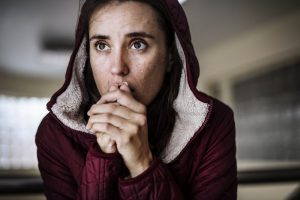 This month, we’re going to dig into some powerful Psalms. What is a Psalm? From the Greek psalmos “song”, they are Hebrew poetry and songs. Most of them have the purpose of praise and worship of God for everything that he does, has created, or has done.
C. S. Lewis wrote on the importance of studying the Psalms as poetry.
“What must be said… is that the Psalms are poems, and poems intended to be sung: not doctrinal treatises, nor even sermons.” Psalms should inspire us. They should be absorbed. Rather than church doctrine, they should be empowering sources of truth, worship, and hope that point towards our holy God.
I was emotionally devastated after the terror attacks of 9/11. Some of the views of my life as a child had become ashes and rubble. We had young children then and my wife and I were concerned for the safety of our family, our neighbors, our nation. I asked our Pastor who also grew up in the New York metro area what would be a good source of scripture to read during this time. He said, the “Psalters.” Of course, I had no idea what he meant. Salters – people who study salt?
Old Testament Psalms are more than poetry, they are Hebrew poetry. They have a unique style and structure. Poetry is not about facts or debatable details, it’s about experience. It’s about expression and feeling. In the coming weeks, we’ll unpack more about the characteristics of Psalms and how important they are in the Christian life.
Recently, a very close friend of our daughter, suffered from a traumatic climbing accident. His injury crushed his leg and required a tourniquet to stop the bleeding and save his leg (and life). It took a Blackhawk helicopter to airlift him out of the mountains and a Medevac helicopter to rush him to a level-1 trauma center. He’s young and strong, but his recovery will be a road of surgeries, therapy, and pain. His parents who are Christian believers were lamenting to me about their feelings of despair. I stumbled upon (or God led me to) Psalm 40 and shared it with them.
“I waited patiently for the Lord to help me,
and he turned to me and heard my cry.
He lifted me out of the pit of despair,
out of the mud and the mire.
He set my feet on solid ground
and steadied me as I walked along.
He has given me a new song to sing,
a hymn of praise to our God.
Many will see what he has done and be amazed.
They will put their trust in the Lord.”
Nothing summed up this experience more perfectly than the first two verses of this Psalm. God always hears our cries. He cries with us. “Jesus wept” over the death of a close friend, even though he would later be healed (John 11:35). No matter what we go through, God is watching and steadying us for the struggles in our life.
“Oh, the joys of those who trust the Lord,
who have no confidence in the proud
or in those who worship idols.
O Lord my God, you have performed many wonders for us.
Your plans for us are too numerous to list.
You have no equal.
If I tried to recite all your wonderful deeds,
I would never come to the end of them.”
Sometimes, trusting in the Lord is all we can do. We rely on our own abilities to protect us, to heal us, to provide us with a safe and lasting future. The older we get in life, the more real it becomes that nothing guarantees anything in life. Even so, God is with us in all our struggles. He never says that things will be carefree. I might have panicked given the amount of blood lost in that accident. I might have felt, I can’t go on, why me, this isn’t fair? God is looking for calm. For trust. There is no depth to the “wonderful deeds” God can do for us. We need to look for them and expect them to happen.
“But may all who search for you
be filled with joy and gladness in you.
May those who love your salvation
repeatedly shout, ‘The Lord is great!’
As for me, since I am poor and needy,
let the Lord keep me in his thoughts.
You are my helper and my savior.
O my God, do not delay.”
God is our deliverer. I’ve seen the difference he makes in people who believe in him. He can do all things with the weakest and he gives his grace to the unworthiest among us. The young man injured in the accident is a fighter. He’s determined, and to his credit maybe even a little stubborn. I have profound hope for him. I know that despite this temporary setback, all things “work together for the good of those who love God and are called according to his purpose.” The accident was a horrible event that changed lives. But, this young man will rise and conquer. If Christ stomped our spiritual enemies, then through him, we shall be “more than conquerors.”
Highlights:
- Think of a tragedy or major setback in your life. Did you expect a positive outcome? Did you try to dig out of it yourself?
- Where do you turn for rescue? Do you need to be rescued? If so, why? If not, why not?
- With all that is going on in the world, there is still an eternal reason for hope. Do you see, feel, and live it?
Key Applications:
- Pray for a friend, family member, or yourself who has a serious need. Read Psalm 40 again. Now, EXPECT God to answer your prayer. Don’t think it might happen, expect that God will MAKE it happen. God might not answer the prayer exactly the way you want, but he will answer your prayer.
- Rescue workers and frontline medical teams have a special gift that most of us cannot imagine. They have an inner core of strength, resolve, and character that is uncommon. They demonstrate a similar faith to Christian believers in their mission. Make it a point to thank them (in person or in writing) and pray for them and their safety.
- Look to your Savior for hope. Take a moment to thank Jesus for giving us a future. He took on a tragic burden for us because we’re not able to. Help others pick up the cross and ease their burdens. There is hope for all who believe.
Where else in your life can you live out the teachings of Christ? Look for next week’s Devotion.