
(Read Isaiah 55)
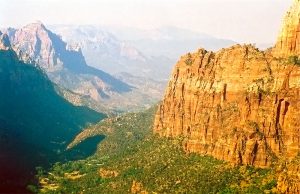 Deeply disturbed by threats to wild places, especially from logging, overgrazing, and dam construction, John Muir came to believe that individual activism wasn’t enough to halt its progress. He recognized the need for a formal organization to rally citizens, influence public policy, and protect the environment. Raised by a strict Scottish Presbyterian father, Muir was taught a harsh, unbending form of religion that emphasized fear and rigid discipline. These early experiences shaped his spiritual outlook, and as he grew older, he found in nature a more personal, life-giving sense of God’s presence.
It’s said that by the time he was eleven, John Muir could recite most of the Bible. In time, he would pour his passion for nature and the wilderness into his deepening faith and relationship with God. As he spent more time in the wild—especially in Wisconsin, Yosemite, and Alaska—his understanding of God and Jesus began to shift. He no longer encountered the divine primarily through sermons or doctrine, but through the beauty, harmony, and power of creation itself.
The Sierra Club was officially founded at a meeting in San Francisco on May 28, 1892. John Muir was unanimously elected as its first president, a role he held until his death in 1914. Muir did not have a single conversion moment like some do. Instead, he gradually reclaimed Jesus from the rigid religious framework of his youth by discovering God’s presence in the living world. His spirituality became one marked by awe, reverence, and a Christ-centered vision of creation.
“You will go out in joy and be led forth in peace;
the mountains and hills will burst into song before you,
and all the trees of the field will clap their hands.”
Isaiah 55:12
This passage attributed to the prophet Isaiah was written to encourage the Israelite exiles to return to their homeland. Isaiah told the people they weren’t simply being set free; they were being led with care and intention by God. The joy and peace described here echoed the better days of the Exodus, filled with delight and shalom.
“The mountains and hills will burst into song before you” represents the cosmic joy of creation responding to God’s redemptive work. “And all the trees of the field will clap their hands” is another way of saying that even the natural world recognizes God’s glory. Redemption touches everything—not just human hearts, but the entire created order. These verses reveal a grand vision: a restored cosmic order where humanity and nature exist in harmony with God’s will. When the improbable happens and the immovable move, something deeper is being signified. It’s not just visual beauty at work—something sacred is breaking through.
On a vacation that only my wife wanted to go on, we entered southwestern Utah on our first morning. It was the vacation of “brown rocks”—that’s what my kids and I called it. But as we drove deeper into Zion Canyon National Park, our perspective began to shift. The scenery was bigger than life. The landscapes felt biblical, like something straight out of the book of Genesis. God-made.
We hiked a long series of switchbacks (Walters Wiggles), each turn revealing new, breathtaking views. At the top was a sign: “Angels Landing.” I’m not sure if it was on my wife’s original list, but my son and I were all in. The trail wasn’t overly steep or technical, but the price of error was unforgiving. Angels Landing is famous for its narrow ridge with sheer, 1,000-foot drop-offs on both sides. The final stretch includes chains bolted into the rock to guide your steps to the summit.
We were rewarded with panoramic views of Zion Canyon, towering cliffs, and an adrenaline-fueled ridge unlike anything I’d experienced. It was one of the most beautiful sights I’ve ever seen. When we returned to meet my wife and daughter, my son raved so much about it that we went back up again with our younger daughter. She had to see for herself what all the excitement was about. Neither my kids nor I expected to see the splendor that awaited us on our trip. I was anxious about leaving my business for a week, and our son and daughter did not want to leave their friends. But true beauty transcends both worry and pleasure. It is a signpost that leads us toward deeper meaning than anything we can create or comprehend.
And why are you anxious about clothing? Consider the lilies of the field, how they grow; they neither toil nor spin; yet I tell you, even Solomon in all his glory was not arrayed like one of these.
Matthew 6:28-29
In His famous Sermon on the Mount, Jesus offers an invitation to release anxiety and trust in God’s loving provision. By pointing to the lilies of the field, clothed in beauty without effort, He reminds us that although God cares deeply for His creation, He cares even more for us. Not even Solomon, the most decked-out man in history, with all his wealth and royal garments, was arrayed as beautifully as a wildflower. This comparison is not about fashion, it is about trust. True peace does not come from striving or storing up possessions, but from resting in the God who clothes the lilies and already knows what we need.
Jesus draws His listeners’ attention to “the lilies of the field,” wildflowers that grow without human cultivation, yet display a beauty that exceeds anything man can create. The question “And why are you anxious about clothing?” highlights our tension between human worry and divine provision. He continues, “Even Solomon in all his glory was not arrayed like one of these.” Solomon, known for immense wealth and royal splendor, serves as a benchmark of humanity’s perception of magnificence. Yet even that cannot compare to the effortless beauty of a flower clothed by God. What I get out of Matthew 6:28-29 is that there is nothing as beautiful as something God has created.
Beauty, as a truth, is both relative and absolute. We find things beautiful for many reasons. Neurologically, we are drawn to patterns, symmetry, and balance. Culturally and personally, we connect beauty with memory, emotion, and meaning. From a spiritual perspective, we find beauty because God is beautiful, and we are made in His image.
My wife and I don’t always agree on what makes clothing attractive. She’ll gush over something I barely noticed, and I’ll point out something that makes her fake-vomit. It’s not that beauty is just skin deep—beauty, as a relative truth, really is in the eye of the beholder. But in life, and in God’s Word, beauty often points beyond itself. It hints at something deeper. There’s meaning and purpose woven into it.
Everywhere in life, and in the Word of God, beauty points us to an absolute truth. I recently asked my son, “What’s the most beautiful thing you’ve ever seen?” Without hesitation, he said, “Angels Landing.” I smiled. Our daughter answered, “The blue-green water of the tribal lands at Havasu Falls—or the secluded lagoon in Thailand that I once visited.” When I asked my wife the same question, she didn’t pause: “The birth of our children.” Then she added, “Dream Lake in Estes Park, the Cascades in Vermont,” and a handful of other God-scaped places.
We might all might find beauty in the same thing. But more often, we’re drawn to different expressions of it. Beauty is relative. It’s subjective. And yet… it also whispers of something absolute. Something more.
O Lord, our Lord,
how majestic is your name in all the earth!
You have set your glory above the heavens.
Out of the mouth of babies and infants,
you have established strength because of your foes,
to still the enemy and the avenger.
When I look at your heavens, the work of your fingers,
the moon and the stars, which you have set in place,
what is man that you are mindful of him,
and the son of man that you care for him?
Yet you have made him a little lower than the heavenly beings[b]
and crowned him with glory and honor.
You have given him dominion over the works of your hands;
you have put all things under his feet,
all sheep and oxen,
and also the beasts of the field,
the birds of the heavens, and the fish of the sea,
whatever passes along the paths of the seas.
O Lord, our Lord,
how majestic is your name in all the earth!
Psalm 8
How’s this one to float your boat? Nothing quite tells us of our place in the order of things like this Psalm. King David captured it beautifully in his hymn of worship, which marvels at both the grandeur of creation and the dignity of humanity. The immensity of creation can make us feel small and insignificant, yet it also becomes a canvas that displays God’s glory. His fingerprints are everywhere. Psalm 8 holds a beautiful tension: we are tiny in the scope of the universe, yet treasured by the Creator of it all.
Paul Tripp wrote, “Some of you think that no one cares if I live or die, or in this immense universe that you live in, do you feel a little lost, or without value? Well, Psalm 8 is written for us when we’re in that kind of experience. It is a hymn about the dignity and honor of every human being made in the image of God”
The word “majestic,” used in the first and last verses of Psalm 8, comes from the Hebrew ad’dir, which can also be translated as “wonderful,” “great,” or “exalted.” As David looked upon God’s creation, he was struck by how truly exalted and awe-inspiring God is. If we only marvel at the ordered arrangement of quarks, atoms, molecules, organisms, and galaxies—but fail to recognize the Creator behind it all—we miss the deeper meaning of it. Everything, and every one of us, has a purpose. Beauty is not meant to end with what we observe. It should lead us to wonder at the One behind it all.
We should marvel at the Creator, not just the creation. God wants us to see more than beauty when we look at His majestic world—He wants us to see Him, the One behind it all, and reflect on what that means for us. The Creator is not only the potter who shaped the clay, but also the Savior who willingly allowed Himself to be broken for us.
Long ago, at many times and in many ways, God spoke to our fathers by the prophets, but in these last days he has spoken to us by his Son, whom he appointed the heir of all things, through whom also he created the world. He is the radiance of the glory of God and the exact imprint of his nature, and he upholds the universe by the word of his power.
Hebrews 1:1-3
Key Application:
- Let the beauty and order of creation remind you that God is near. Embrace His promises with a heart full of joy and peace, knowing that even the natural world reflects His goodness. Creation not only reveals the joy of its Maker; it also longs for the day when everything will be made new. When you see the harmony in nature, let it stir your hope for the greater restoration God has promised. Live today in light of that future, trusting that you are part of His redemptive story.