
(Read Judges 16:28–30)
 Almost six years ago, my brother underwent a life-changing heart surgery called valve-sparing aortic root replacement, also known as the David procedure. It was a somewhat scary time for our family. This complex surgery is designed to treat serious conditions such as aortic root aneurysms and dissections. I seem to remember that his aneurysm measured at least 6 centimeters. What made this procedure especially meaningful was that instead of replacing his aortic valve with an artificial one, the surgeons were able to preserve his own valve. This approach allowed him to avoid a lifetime of medication or the potential complications associated with a replacement valve.
That experience made a deep impact on me. It reminds me of how God often works in our lives. He has a purpose for everything. Rather than discarding what is damaged, God restores what still has value. He strengthens what remains and brings healing from within. Logically, my brother didn’t really have a choice about having the surgery, but he was still confronted with an opportunity: he could either let the uncertainty about the procedure, recovery, and future overwhelm him, or he could choose to trust and surrender.
“I was pretty calm the whole time leading up to it and grateful it had been caught in time,” he confided. “I had moments of anxiety as I got closer to the date, but I eventually surrendered and let my team do their jobs.” While he’s not a worrier by nature, I believe my brother places his trust in God, or in whatever he understands as his Divine power. That’s a conversation for another day, but the peace he found in surrender speaks for itself.
Throughout life, we are all faced with challenges that shape and define us. Some are minor, but most of us, at some point, will encounter trials bigger than ourselves—situations completely out of our control. Whenever I find myself in times of struggle, I’m reminded that my time on Earth is truly borrowed. Adversity has drawn out qualities in me that I might never have discovered otherwise. Strangely enough, it has made me a better person. Life’s storms have shaped me into someone more compassionate, more resilient, more hopeful, and without a doubt, more resolute in my faith.
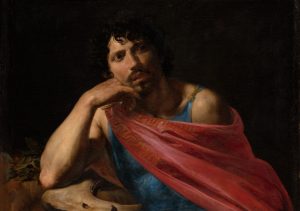
Our church’s youth pastor delivered an incredible message last Sunday on “Opportunities,” or more specifically, “Missed Opportunities.” He shared a relatable personal story and walked us through many passages in Judges about Samson and Delilah. The best part of his sermon is that he extracted some nuggets of Gospel truth that I hadn’t noticed before.
Then Samson went down with his father and mother to Timnah, and they came to the vineyards of Timnah. And behold, a young lion came toward him roaring. Then the Spirit of the Lord rushed upon him, and although he had nothing in his hand, he tore the lion in pieces as one tears a young goat.
Then the Spirit of the Lord rushed upon him, and the ropes that were on his arms became as flax… And he found a fresh jawbone of a donkey, and put out his hand and took it, and with it he struck 1,000 men.
But Samson lay till midnight, and at midnight he arose and took hold of the doors of the gate of the city and the two posts, and pulled them up, bar and all, and put them on his shoulders and carried them to the top of the hill that is in front of Hebron.
Judges 14:5–6; 15:14–15; 16:3
Together, these passages reveal that Samson’s strength was not merely physical but a direct result of the Spirit of the Lord working through him. His victories over the lion, the Philistine army, and even the fortified gates of a city demonstrate that God’s power can work through flawed and imperfect people to accomplish His divine purposes. Despite Samson’s impulsive behavior and moral failings, God still chose to empower him in key moments, reminding us that His strength is made perfect in our weakness (2 Corinthians 12:9). These accounts call us to recognize that our true strength doesn’t come from our abilities or achievements but from our dependence on God. When we yield to His Spirit, He can accomplish far more through us than we could ever do on our own.
Samson’s superhuman strength was a holy opportunity to fulfill God’s will. Defeating the Philistines, Israel’s enemies, was significant, but the story in Judges suggests that God had greater plans for Samson than simply subduing an enemy. The account of Samson and Delilah is ultimately less about raw power and more about the importance of obedience and surrender. It challenges us to follow God’s will, even when it is difficult, and to step boldly into the opportunities He places before us, especially when they stretch us beyond what we think we can handle.
Then Samson called to the Lord and said, “O Lord God, please remember me and please strengthen me only this once, O God, that I may be avenged on the Philistines for my two eyes.”
And Samson grasped the two middle pillars on which the house rested, and he leaned his weight against them, his right hand on the one and his left hand on the other.
And Samson said, “Let me die with the Philistines.” Then he bowed with all his strength, and the house fell upon the lords and upon all the people who were in it. So the dead whom he killed at his death were more than those whom he had killed during his life.
Judges 16:28–30
We all know the story. Samson was gullibly tricked into giving away the secret of his strength. He let his ego and poor decisions in moments of weakness rob him of God’s gift. The greater lesson is that Samson managed to reconcile his fallen state and may have achieved the redemption God intended for him.
Samson’s final recorded words are a prayer, and interestingly, it is the only prayer of Samson found in the biblical text. He cries out, “O Lord God, please remember me and please strengthen me only this once.” This plea marks a spiritual turning point. After a life marked by self-satisfaction, impulsive decisions, and moral compromise, Samson finally called upon the Lord in humility. His short and desperate prayer acknowledges God, not his hair, as the true source of his strength.
Samson’s greatest impact came not during his life, but in his final act of surrender. Though his physical eyes had been gouged out, he saw more clearly than ever before. His story also foreshadows the biblical theme of redemptive sacrifice, pointing forward to Christ, who overcame His enemies through death rather than by force.
A national pastor I listen to on Spotify is Greg Laurie, founder and lead pastor of Harvest Ministries. Harvest is one of the largest churches in the country. Laurie has a hard-hitting personal story that might have devastated many families. His 33-year-old son tragically died in a car crash. Laurie has shared in multiple sermons that during that time, he felt as though the world was closing in on him and that nothing around him felt real.
One day, fellow pastor Chuck Colson came by his house to offer support. Colson helped keep Laurie’s focus on what matters most. “Don’t trade what you know for what you don’t know,” Colson told him—a phrase Laurie has repeated in his sermons. As children of God and heirs with Christ, we are aware of our freedom from eternal damnation. Laurie said, “I knew God loved me and that I would be reunited with my son in Heaven, so the uncertainty of the unknown didn’t matter.” He described coming to a crossroads where he had to choose between surrendering to God’s providence or falling into the grip of Satan’s worldly traps.
“Father, if you are willing, remove this cup from me. Nevertheless, not my will, but yours, be done.”
Luke 22:42
Perhaps no verse in the Bible captures surrender more powerfully than this one. Coming from the lips of God Himself, Jesus gives up His will and His life, fully entrusting them to the Father. In the Garden of Gethsemane, facing the cross, Jesus honestly expresses His human desire to avoid suffering: “Remove this cup from me.” Yet He yields completely to the Father’s will. The “cup” symbolizes God’s judgment and the weight of humanity’s sin, which Jesus was about to bear.
The power of true surrender lies in the balance between vulnerability and obedience. It is not the absence of struggle, but the choice to obey God even when the cost feels unbearable. Surrender is the ultimate act of relinquishing control and trusting that God’s plan, though painful, is perfect. This moment was so intense and emotional for Christ that just two verses later, we read that He literally sweat blood—a condition known as hematidrosis.
Oh Lord
Change me like only You can
Here with my heart in Your hands
Father, I pray
Make me more like Jesus
This world is dying to know who You are
You’ve shown us the way to Your heart
Father, I pray
Make me more like Jesus
More Like Jesus — Passion Music
Key Application (4 Quick Points):
- God Redeems Brokenness
- God can use your lowest point for His greatest purpose.
- Real strength comes from surrender, not control.
- Your legacy is not defined by your failures, but by your faith.