
(Read Mark 1)
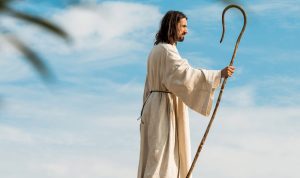 Imagine you’re on the beach, doing your job, minding your own business, and a stranger comes up and starts talking to you. You’re unfamiliar with this man, and out of nowhere, he says, “Follow me, and I will make you fishers of men.” What’s your reaction going to be? I’m a bit of an extrovert, so conversations with strangers don’t put me off, but I’m not as social in the workspace — I have a job to do. Simon, Andrew, James, and John did, too. They were plodding away with their nets, casting and mending them, only to be interrupted by some guy they didn’t know or barely knew.
John’s Gospel mentions that after Jesus’ Baptism, Simon met Jesus through John the Baptist, but it’s unclear whether they ever talked or how well they knew each other. My hunch is that if they had a significant relationship before Jesus called them, it would have been mentioned somewhere in one of the Gospels. Gallilee is a large area in the northernmost district of Israel. During the Roman and late Second Temple period (3rd century BC – 70 AD), Galilee encompassed a larger area than it does today. Galilee was approximately 1,500 square miles back then compared to about 635 square miles today. It’s safe to assume that Simon, Andrew, James, or John probably didn’t cross paths often or have a close familiarity with Jesus. But Jesus knew them.
So, back to your job. When someone you don’t know interrupts you abruptly, you’re probably not going to be all that accommodating. You’re not going to entertain some wild notion that a stranger proposes. You didn’t ask to be bothered, you didn’t invite the conversation, you’re just trying to get through the day and catch some fish.
Passing alongside the Sea of Galilee, he saw Simon and Andrew, the brother of Simon, casting a net into the sea, for they were fishermen. And Jesus said to them, “Follow me, and I will make you become fishers of men.” And immediately they left their nets and followed him. And going on a little farther, he saw James the son of Zebedee and John his brother, who were in their boat mending the nets. And immediately he called them, and they left their father Zebedee in the boat with the hired servants and followed him.
Mark 1:16-20
I love how Mark emphasized the urgency and immediacy of Jesus’ calling to His disciples. His repeated use of the Greek word “euthys,” meaning immediately, certainly drives this home. Christ’s urgency highlighted the suddenness of the Kingdom of God arriving and the beginning of Jesus’ mission.
All the fishermen left their nets behind, abandoning their earthly livelihood to follow Jesus. What a radical turn of events, where seeking God’s kingdom becomes their new way of life! Jesus approached them and invited them to follow Him. Notice that Jesus didn’t say admire me or my people; He only asked to be followed. This passage reminds us to be open to God’s calling in our lives, even if it means leaving behind comfortable routines or earthly pursuits. It calls attention to the importance of faith and obedience in following Jesus.
The disciples’ impromptu, improbable, and immediate response not only involved leaving their occupations but also their families. None of them were holy, scholarly, or men of high status. Jesus doesn’t usually call the most likely to further His Kingdom. He gets more glory when the unlikely do amazing things in His name. Jesus doesn’t come to make our lives work, but He employs us in His work. With their nets and families behind, the disciples demonstrated an unwavering commitment to Jesus. Their call demanded a radical reshuffling of priorities, whereby Jesus and His mission were valued above everything else.
When Jesus saw him lying there and knew that he had already been there a long time, he said to him, “Do you want to be healed?” The sick man answered him, “Sir, I have no one to put me into the pool when the water is stirred up, and while I am going another steps down before me.” Jesus said to him, “Get up, take up your bed, and walk.” And at once the man was healed, and he took up his bed and walked.
John 5:6-9
According to Scripture, this poor man had been an invalid or at least sick for 38 years. Every day, he would lie on his mat, hoping and maybe even praying to be healed. His hope rested on someone to assist him into the healing pool near the Temple in Bethesda. The name “Bethesda” or “House of Mercy” in Aramaic hinted at its association with healing.
Jewish traditions, legends, and local beliefs stated that an angel would stir the pool’s water, and the first person to enter after the stirring would be healed.
While the (urban) legend focused on an angel’s intervention, some people might have attributed the healing potential to the pool’s water. The pool involved ritualistic bathing, and these immersions in natural springs and pools held significance in Jewish purification rituals. What also added to legendary beliefs about the pool was its location and proximity to the Temple, fueling the perception of it being divinely blessed.
“Do you want to get well?” Jesus asked the man. He was inquiring about the man’s physical desire to be healthy and probing his spiritual desire to be made whole. Jesus’ command to the man was direct and powerful. Sometimes, He’s that way with us, too. Christ’s command to “Get up” bypassed the man’s ritualistic dependence on the pool and spoke directly to his faith and active participation.
Why didn’t Jesus just tell the invalid to get up? Why did He also tell him to take up his bed, too? Carrying the mat could be an example of taking responsibility for one’s own faith journey. Was the man healed because of his faith alone? Only Jesus knows that. I believe that Jesus healed him not because of the man’s faith or righteousness but because of Jesus’ compassion for his unbearable suffering. Whether the healed man had faith or not isn’t critical to the message; what is critical is that He would see Jesus for who He is.
Later Jesus found him at the temple and said to him, “See, you are well again. Stop sinning or something worse may happen to you.” The man went away and told the Jewish leaders that it was Jesus who had made him well.
John 5:14-15
Jesus didn’t withhold healing until the man repented. He didn’t say, “OK, first stop sinning, then come back, and I will tell you to get up off your mat.” Christ loved the man first, healed him, and then commanded him to sin no more. Knowing Christ opens our eyes to the person who knows us perfectly. He knows everything about us and loves us nonetheless. Whatever the invalid had done would be forgiven. Jesus did what only God can do, and the man off the mat recognized Him.
They did not say, ‘Where is the Lord
who brought us up from the land of Egypt,
who led us in the wilderness,
in a land of deserts and pits,
in a land of drought and deep darkness,
in a land that none passes through,
where no man dwells?’
Jeremiah 2:6
Jeremiah asked a rhetorical question in this verse, underlining the Israelites’ lack of gratitude and remembrance for God’s past interventions. Things had gotten easy for his people, and Jeremiah pointed out, “Hey, did you forget where we came from?” He highlighted their ingratitude and forgetfulness, criticizing them for neglecting to acknowledge and celebrate God’s past faithfulness. He criticized them for their focus shift away from God to pursue other sources of fulfillment.
As a potent warning against forgetting God’s past deeds and neglecting to prioritize Him, Jeremiah reminds us of the importance of thankfulness and acknowledging God’s presence and providence.
What the verse points out to me is spiritual amnesia. I can safely say that we all suffer from this, not just the Israelites in Jeremiah’s day. The minute my adversity transitions to resolution, my spiritual memory falls prey to the effects of amnesia. Despite the clear evidence of God’s intervention in our lives, we fail to recognize and acknowledge His presence. We fail to recognize Him for who He is.
Salvation belongs to the Lord;
your blessing be on your people! Selah
Psalm 3:8
Throughout Scripture, Jesus claimed nothing else about Himself other than his Divinity. Jesus’ claims of God’s sovereignty, His healing of the sick, His companionship with sinners, and, in His accusers’ minds, blatant disregard for their ritualistic interpretations brought forth prejudice, fear, and violence — eventually leading to the cross. The unenlightened didn’t see Christ for who He really is. Their religion blinded them from the love and beauty that comes from true faith in God. The disciples didn’t think about logistics when they left everything to follow Jesus. When the invalid at the Bethesda pool trusted Jesus’ commands to get up and walk, he stopped worrying about getting into the pool. Jesus didn’t worry about healing on the Sabbath. Can we let go completely to see Him for who He is? He is God.
Thank you, God, for what you have revealed to us, and thank you, God, for what you haven’t revealed but what you do and who you are.
“Every day the Christian is to die. Every day he renounces the sovereignty of his own will. Every day he renews his unconditional surrender to Jesus Christ.”
John R.W. Stott
Key Application:
- Embrace the Follow. This might mean leaving behind familiar comforts and routines, but it promises a more fulfilling and purposeful life. Consider areas where God might invite you to step out in faith and embrace a new direction. Trust in his guidance, and allow Him to transform you into a fisher of people, impacting those around you with Christ’s love and grace.
Where else in your life can you live out the teachings of Christ? Look for next week’s Devotion.