
(Read Isaiah 9)
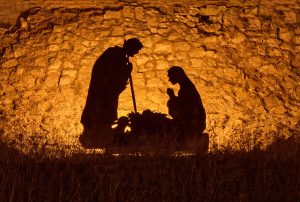 This year, we celebrated Christmas a little early. Our son and his family are traveling out of state to spend the holidays with his wife’s family, and our daughter, a dedicated hospital nurse, will be working on Christmas Eve. She visited earlier this week but left today. The house feels quieter now without the grandkids and a little emptier without our children. My wife and I are deeply grateful for the time we did share, but like all parents and grandparents, we always wish those moments could last just a bit longer.
Still, there’s something different about this Christmas season. It’s something that’s been evolving over time. As a child, Christmas was all about family gatherings, celebrations, and the joy of giving. Those heartwarming traditions still surround me, but Christmas has taken on a deeper, more profound meaning as my faith matures. It’s no longer just the season’s shine and sentiment that shape my perspective; these things now point me to something greater. Christmas is about remembrance—of God’s incredible gift—and a hopeful anticipation of what is yet to come. It’s a time to look back in awe and forward with faith, making it all the more meaningful.
May God be gracious to us and bless us
and make his face shine on us—
so that your ways may be known on earth,
your salvation among all nations.May the peoples praise you, God;
may all the peoples praise you.
Psalm 67:1-3
Psalm 67 can be interpreted as a blessing that extends to all nations and accurately echoes Jesus’ message: salvation is available to everyone, not just the Jewish people. The glorious face of God’s blessing is revealed through the grace and presence of Jesus. It’s mind-boggling to note that Psalm 67 was written centuries before Jesus’s birth because it contains many glimpses of Christ’s salvation to His believers. The Psalm ramps up into a call for all people, every ethnic group and nation, to acknowledge and praise God. It is a bold and accepting view that welcomes a diverse choir of worshipers in a way that illustrates Jesus’s vision.
Christians see this prophecy as closely linked to Christ’s command in the Great Commission (Matthew 28:19-20), where He calls His followers to make disciples of all nations. This vision finds its ultimate fulfillment in Revelation 7:9, where “a great multitude from every nation” gathers to worship the Lamb, creating a powerful image of unity and redemption. Within the Old Testament context, the psalmist anticipated a time when the knowledge and worship of God would extend beyond the borders of Israel. The Christian message, accessible to all who believe, embodies this universal truth more profoundly than the superficial trappings of Christmas Eve: the services, the window candles, the twinkling lights, and the carols.
Psalm 67:1-3 intertwines a beautiful weave between blessing and witness. As God’s people seek His face and experience His grace, their lives become a beacon of light that illuminates the path for others, leading the whole earth toward heartfelt worship of the one true God.
Nevertheless, there will be no more gloom for those who were in distress. In the past he humbled the land of Zebulun and the land of Naphtali, but in the future he will honor Galilee of the nations, by the Way of the Sea, beyond the Jordan—
The people walking in darkness
have seen a great light;
on those living in the land of deep darkness
a light has dawned.
Isaiah 9:1-2
Isaiah 9:1-2 offers some of the most potent prophecies of Jesus in the Old Testament. They paint a picture of deep darkness and despair in the regions of Zebulun and Naphtali, yet amidst this gloom, a “great light” is foretold. This “light” represents the coming of Jesus Christ, bringing hope, joy, and peace to a world shrouded in darkness. While the specific demographics of these regions have evolved, their historical significance is profound. Originally inhabited primarily by Jewish people, they became a diverse mix during Jesus’ time, foreshadowing the universal nature of His message – a message of hope and salvation intended for all people.
I’ve often reflected on the profound impact a single light surrounded by darkness can have on my soul. One of the most moving moments for me is singing Silent Night without any instrumental accompaniment—it brings the lyrics to life in a deeply personal and illuminating way.
One Christmas Eve, I remember when a church member read a passage about the creation of the Earth, connecting it to the coming of Jesus. The Sanctuary and Altar were completely dark, except for the soft glow of a single candle in front of her. The light was so subtle it barely illuminated her face. I wasn’t familiar with the passage or its connection to Jesus at the time, but that moment etched it into my memory forever. It was a quiet but powerful reminder of the light Jesus brings into the world—and our lives.
For to us a child is born,
to us a son is given,
and the government will be on his shoulders.
And he will be called
Wonderful Counselor, Mighty God,
Everlasting Father, Prince of Peace.
Of the greatness of his government and peace
there will be no end.
He will reign on David’s throne
and over his kingdom,
establishing and upholding it
with justice and righteousness
from that time on and forever.
The zeal of the Lord Almighty
will accomplish this.
Isaiah 9:6-7
Paul Tripp shared that this passage is his favorite in the Christmas story because, as he explained, “In these four names of Jesus, you find the complete content of the Christmas story.” He further reflected, “Under the careful direction of the Holy Spirit, Isaiah purposefully chose these four names to communicate how the Messiah Son is precisely what you and I desperately need. Long before we were born, God had appointed the One who would be the remedy for every symptom of the sin that would infect us all.”
This profound insight highlights how Isaiah’s prophecy not only foretells the coming of Christ but also encapsulates the heart of the gospel — Jesus as the perfect fulfillment of humanity’s deepest needs and God’s ultimate plan of redemption.
We all have problems. The human race has always faced issues, from Adam and Eve to Amy and Steve. The Prophet Isaiah wrote about the problems Israel was facing and reassured them that there would be a Savior who would come to be the ultimate solution. Despite modern culture thinking, we’re deeply flawed, sinful sheep, seeking pleasure instead of the only answer that can truly save us. Max Lucado wrote, “Since our greatest need is forgiveness, God sent us a Savior.
Tidings of hope and salvation comfort followers of Jesus from this passage, bringing a vision of a future characterized by peace, justice, and the eternal reign of God. It is a reminder of God’s faithfulness in fulfilling His promises and ultimate plan for redemption. Written around 740 to 700 BC, Isaiah 9:6-7 painted a majestic portrait of an eternal ruler who embodied divine wisdom, power, endless peace, and justice. Christians find their ultimate fulfillment in Jesus, the Messiah, who established a kingdom that transcends the boundaries of time and space.
In the beginning was the Word, and the Word was with God, and the Word was God. He was with God in the beginning. Through him all things were made; without him nothing was made that has been made. In him was life, and that life was the light of all mankind. The light shines in the darkness, and the darkness has not overcome it.
The Word became flesh and made his dwelling among us. We have seen his glory, the glory of the one and only Son, who came from the Father, full of grace and truth.
John:1-5;14
The Gospel writer John tells the most beautiful story ever about Christmas without mention of the traditional icons or metaphors. John didn’t even use the name “Jesus” or “Christ”; instead, he wrote “Word,” which provided meaning for Jews and Gentiles in 1st century Judea. God used a clever literary device in this Gospel with self-insertion. The incarnation of Christ was another entrance of God in the Christmas story.
John introduces the reader to Jesus’ divine identity and sacrifice, which offers eternal life. The Word-made-flesh encompasses the original creation while pointing to the new creation that will be fulfilled in Christ’s second coming. This Gospel weaves many creation motifs, suggesting that Jesus brings a new creation and a way out of spiritual darkness. Through Him, God’s life-giving presence is fully manifest.
Christmas isn’t about the birth of this perfect baby. It’s not the stark manger in a dark and smelly stable, and it’s definitely not about three wise men or kings bringing gifts to a child. Christmas is a promise. God gave us Jesus, a Wonderful Counselor, Mighty God, Everlasting Father, and Prince of Peace. Yes, Christmas is celebrating the birth of a baby more than 2,000 years ago, but this baby was Jesus who became Christ, our Messiah. Why was His birth so miraculous? Not only is Christmas the celebration of the birth of a King, it anticipates the birth of the King of Kings. The baby was much more than a great prophet, teacher, or righteous man. He is God. Nothing compares to Him. Nothing matches His status or greatness. Christmas is the birth of a baby who would later say, “All power is given unto Me in Heaven and on earth. (Matthew 28:18-20)” Unlike any other king in heaven or earth, this King died for His people. The most fitting way to honor and celebrate this birth is to believe in Him, glorify Him, act like Him, let Him into your heart, and make disciples of all nations. Merry Christmas!!!
Father, the hour has come; glorify your Son that the Son may glorify you, since you have given him authority over all flesh, to give eternal life to all whom you have given him.
John 17:2
Key Applications:
- Jesus is our Wonderful Counselor. Seek God’s wisdom regarding your decisions and challenges. Trust in His guidance to lead you down the right path.
- Jesus is our Mighty God: Rest in His strength. Nothing is beyond His power.
- Jesus is our Everlasting Father: Take comfort in His eternal love and care.
- Jesus is our Prince of Peace: Allow His peace to rule in your heart — always.