
(Read Deuteronomy 29)
 One of the most beautiful aspects of the Christian faith is the knowledge that we are never alone; we are loved, and we are saved. Whether I need courage for a public event, strength to face a health crisis, or the right words to comfort a friend, I always find confidence and joy in walking with Jesus. While most Christians share common beliefs for the cornerstone of our faith, too many times we also feel tiny chards of glass that create discord and disagreement.
After a long time, in the third year, the word of the Lord came to Elijah: “Go and present yourself to Ahab, and I will send rain on the land.” So Elijah went to present himself to Ahab.
1 Kings 18:1
During the reign of King Ahab of Israel, there was a severe drought in the land, attributed to the prophet Elijah’s declaration that there would be no rain except by God’s word. The drought had lasted for years, causing widespread famine and hardship. Elijah prayed for rain confidently for no reason other than God had already promised it.
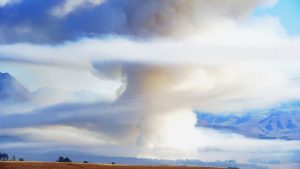
Elijah’s prayer for rain showcased his unwavering faith in God’s power, his role as a prophet, and God’s response to his prayers. Eventually, Elijah instructed King Ahab to eat and drink because he knew a heavy rain would be coming. Elijah went to the top of Mount Carmel and prayed fervently for rain. He sent his servant seven times to check for signs of rain. When finally the afternoon skies opened up, the sky became black with clouds, and a heavy rain ensued ending the prolonged drought.
Elijah prayed for what God had said He would do, not once but seven times. God is all-knowing and sovereign, so the rain was in His plan from the beginning. But did Elijah’s prayers make a difference? When we pray, we ask God to intervene in our lives and the world around us. We trust that God hears our prayers and will answer them in His own time.
Elijah was a man with a nature like ours, and he prayed fervently that it might not rain, and for three years and six months it did not rain on the earth. Then he prayed again, and heaven gave rain, and the earth bore its fruit.
James 5:17-18
A client of mine is a successful international consultant who coaches leaders of large organizations. He posted a piece recently entitled “Upward Spiral,” signifying an ongoing upward process towards a specific goal. While developing graphics for this campaign, I thought about this upward spiral process as a metaphor for my understanding of the journey towards Christ — balancing what I know about God’s sovereignty and what I need to do as a believer.
I have had similar discussions about our salvation among many people and even some of my friends. Without going down the complex rabbit hole of the predestination vs. election debate, some things are worthy of discussion and prayer.
The earliest known mention of the doctrine of predestination is in the writings of the Jewish philosopher Philo of Alexandria (20 BC-50 AD). A few hundred years later, some early Christian fathers, such as Augustine of Hippo and Pelagius, continued this argument. Unless Jesus comes back first, this debate won’t go away any time soon. I believe that the Bible adds validity to both claims, and while I lean more heavily towards one side, the most critical thing I know, believe, and stand for as a Christian is that Jesus Christ is the Son of God and my Savior. I am a sinner and dead without Christ. Because of Him, I am saved to live in eternity with Him.
“Sir,” the invalid replied, “I have no one to help me into the pool when the water is stirred. While I am trying to get in, someone else goes down ahead of me.”
Then Jesus said to him, “Get up! Pick up your mat and walk.” At once the man was cured; he picked up his mat and walked.
The day on which this took place was a Sabbath, and so the Jewish leaders said to the man who had been healed, “It is the Sabbath; the law forbids you to carry your mat.”
John 5:7-10
Jesus saw the man lying by the pool and knew he needed healing. He didn’t hesitate to help, even though it was the Sabbath, and the religious leaders considered it wrong to heal someone on the Sabbath. Jesus’ command to the man to get up and walk was a radical act. The religious leaders even scolded the healed invalid for carrying his mat on the Sabbath. God knew Jesus would heal the man all along. But what about through the invalid’s eyes? He knew that Jesus healed him; did he also think that his act of carrying the mat led to his cure? Jesus told him to do so, and he responded and obeyed.
I can’t help but notice the contradictions in this passage. The religious leaders were furious with the man for carrying anything and with Jesus for “healing” on the Sabbath, but all Jesus showed was compassion for the sick and suffering.
“No one can come to me unless the Father who sent me draws them, and I will raise them up at the last day.
John 6:44
Later in the Gospel of John, we read Jesus saying that no one can come to Him unless God the Father draws them. This means that salvation is not something that we can achieve on our own. It is something that God must do in us. “Draw” in this verse can be understood in several ways. It can mean to attract, call, or compel. I think that Jesus used it to mean all of these things. God is the one who attracts us to Himself, who calls us to Himself, and who compels us to come to Him.
Since Jesus gave all credit to “the Father who sent me,” that tells us that He is not acting on His own authority but rather on the authority of His Father. Our salvation is not something that we can earn or deserve. Coming to the Father is not a human decision or effort that leads someone to believe in Him; it’s a divine initiative facilitated by the Father.
For it is God who works in you, both to will and to work for his good pleasure.
Philippians 2:13
Here, the apostle Paul is saying that God is the one who empowers us to do good works. He is the one who gives us the desire to do good and the power to carry it out. This means we can’t rely on our own strength to live a good life. We need God’s help.
God works in us both inwardly and outwardly. “Both to will and to work” is significant because He works in our hearts to give us the desire to do good, and He works in our actions to enable us to carry out that desire. He is not working in us to make us feel good or look good. He is working in us to bring glory to Himself.
If all good things depended on me, the world wouldn’t see most of my best intentions. My walk is about both divine sovereignty and human responsibility. Do I allow God to work in and through me? We have a part in this, too.
The secret things belong to the Lord our God, but the things revealed belong to us and to our children forever, that we may follow all the words of this law.
Deuteronomy 29:29
I didn’t pay much attention to this Scripture until I started studying for this devotional. Moses said so much here, simply. There are certain or “secret” things that only God knows that reside beyond our understanding. However, there are those other things that have been revealed through God’s teachings and the law that are meant for us to follow and adhere to.
“Therefore render to Caesar the things that are Caesar’s, and to God the things that are God’s.” (Matthew 22:21). The secret things that belong to the Lord emphasize the sovereignty of God. It affirms the idea that there are aspects of the universe, existence, and divine plan that are known only to God. The expression, “Keep the main thing, the main thing,” comes to mind. We should focus on what has been revealed to us.
God goes to great lengths to reveal His love, word, and hope for us. Our responsibility is to search out these truths and share them with others. We can never know or be responsible for the secret things God hasn’t revealed to us, so we shouldn’t put up barriers between us and other believers or non-believers defining them.
I had lunch with a Pastor and Bible Professor the other day, and in discussing this verse in Deuteronomy, he said with a smile, “Why do we spend so much time trying to figure out the secret things when we have all the things He’s already revealed to us?” I laughed. I don’t know. Why do we?
Withholding certain things is God’s prerogative, while revealing certain things demonstrate His purposes. More than one time, I have had conversations with believing friends about “coming to Christ.” It usually plays out like this, “We don’t come to Christ. He comes to us.” I agree. God chooses us for His good and glory. But from a human vantage point, aren’t stories also about perspective? Until Jesus makes us aware of Him, we don’t personally know Him. Jesus has us all along, we just don’t know it. Jesus knew He would heal the invalid by the pool, but the invalid didn’t know it until Jesus appeared and told him to pick up his mat. The apostle Nathaniel was skeptical about this stranger from Nazareth until Jesus revealed Himself, “Jesus answered, ‘I saw you while you were still under the fig tree before Philip called you.’” (John 1:48).
Our choices and prayers matter. God wouldn’t have told us so in His Word if they didn’t. Our mission is to accept His grace and be willing to let Him work through us. The Creator is above His creation; He doesn’t owe us answers or explanations. There are things we’d like to know and things we do know. It’s all an upward spiral leading us to God.
Yet to all who did receive him, to those who believed in his name, he gave the right to become children of God—
John 1:12
Key Applications:
- Read Deuteronomy 29:29 — What do you think? Keep an open mind when you read His revelations to what He is telling you. Be committed to following God’s commands.
- We should not be afraid to ask God for help. Secret things belong to God, but the revealed things belong to us and our children, so there is so much we don’t know. We should not be afraid to ask God for help when faced with challenges or difficult situations.
Where else in your life can you live out the teachings of Christ? Look for next week’s Devotion.