
The Power of Prayer Warriors
 (Read Acts 12)
Prayer comes in many forms. Some of us pray formal prayers. Some pray only in church. Others, pray whenever necessary. God hears and answers all our prayers, but rather than changing His heart, prayer aligns us with His will.
British Pastor, Charles Spurgeon often talked about the engine room in the basement of his church. Spurgeon would take visitors to a room where about 300 people would be involved in continuous prayer. He called it the “powerhouse of this church.”
It was about this time that King Herod arrested some who belonged to the church, intending to persecute them. He had James, the brother of John, put to death with the sword. When he saw that this met with approval among the Jews, he proceeded to seize Peter also. This happened during the Festival of Unleavened Bread. After arresting him, he put him in prison, handing him over to be guarded by four squads of four soldiers each. Herod intended to bring him out for public trial after the Passover.
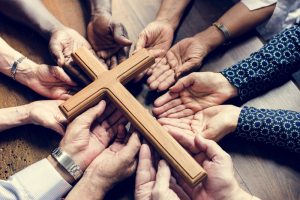
So Peter was kept in prison, but the church was earnestly praying to God for him.
Acts:1-5
King Herod was an ego maniac. Unlike others who felt threatened by the Jesus followers, Herod was driven purely by political motives. The ruling elite at the time despised the early church, so it pleased many of these citizens who didn’t like Christians to see them persecuted. Out of politically expedience, Herod used the excitement and frenzy of the Feast of the Unleavened Bread to arrest and execute Peter and James. James was martyred with a sword. Most scholars believe he was beheaded. With his execution, any illusions of the twelve disciples’ Divine protection was shattered.
Peter was imprisoned. Rather than dwelling in self-pity or worry, he trusted. He actually slept peacefully between two guards. Sometimes, when we have people praying for us, all we can do is surrender and trust. This wasn’t ordinary prayer. The verb Luke used in Acts, “ektenos” is the same word he used to describe when Jesus was praying in agony to God in the Garden of Gethsemane. It’s a medical term describing stretching a muscle to the limit.
As opposed to the intensity of the prayers for Peter, our prayer can be powerless if it lacks conviction. Sometimes we pray a wish list. Sometimes we pray half-heartedly for things that we’re lukewarm about, like things that don’t affect our daily lives. God sees right through this.
Then the angel said to him, “Put on your clothes and sandals.” And Peter did so. “Wrap your cloak around you and follow me,” the angel told him. Peter followed him out of the prison, but he had no idea that what the angel was doing was really happening; he thought he was seeing a vision. They passed the first and second guards and came to the iron gate leading to the city. It opened for them by itself, and they went through it. When they had walked the length of one street, suddenly the angel left him.
Acts:8-10
An escaped prisoner openly walking in a public place like the iron gate was a precarious situation for Peter. He wasn’t worried. How many times do we worry about something days, weeks, months, or years before it’s supposed to happen? We often worry about the iron gate in our life before we ever get to it. When we come to it, God will take care of it. For Peter, the gate opened itself.
There was a big commotion caused by Peter’s escape. As was custom in those days, jailers who let prisoners escape were usually sentenced to death themselves. So now on his own, Peter went to the safety of his fellow believers. This early Christian community was his family, his strength, and his solace. Peter now realized that he was not seeing visions, but that the Lord sent him an angel to rescue him.
Peter then went to the sanctuary of Mary’s (mother of John) house. Imagine his reaction when he was greeted with disbelief by the disciples! He just went through an angelic rescue and no one believed him.
But Peter kept on knocking, and when they opened the door and saw him, they were astonished. Peter motioned with his hand for them to be quiet and described how the Lord had brought him out of prison. “Tell James and the other brothers and sisters about this,” he said, and then he left for another place.
Acts 16-17
I find it interesting that just a little while earlier in this story, the disciples were praying fervently for Peter’s safety and rescue. but when he comes knocking on their door after his escape they don’t believe it. Did they doubt God’s ability to save him? Were they doubting the power of their own prayer?
Peter’s imprisonment and escape was a story he wanted shared. It was not only a real example of God’s plan in action, but also an example of the limitless power of prayer. I’m not sure how Peter told them to share the news of God’s rescue, but knowing Peter, it was a command rather than a suggestion. Positive examples of prayer provide fuel for the growth of a church. This wasn’t about Peter’s ego, he knew the importance of those events.
On the appointed day Herod, wearing his royal robes, sat on his throne and delivered a public address to the people. They shouted, “This is the voice of a god, not of a man.” Immediately, because Herod did not give praise to God, an angel of the Lord struck him down, and he was eaten by worms and died.
But the word of God continued to spread and flourish.
Acts 12:21-24
John Piper said about Acts 12, “If you oppose Jesus, you lose.” Herod was all about his own glory. He credited himself for his own popularity. Herod wanted to be seen as an all powerful being and he sought praise from everyone around him. But God had answers to Herod’s vanity. God rescued Herod’s prize prisoner, he took Herod’s life in a horrific manner, and His word grew and multiplied through the land.
History is ripe with stories of men who thought they could resist God and get away with it. Friedrich Nietsche was the philosopher known for his concept that “God was dead.” He also claimed that Christianity was a lowly religion for weaklings. Nietsche’s passionate hatred of Christians and disdain for God consumed him. He had a nervous breakdown and spent the rest of his life in insanity.
Throughout the timeline of Christian history, every significant period of awakening has been powered by intense, consistent, collective prayer. Tim Keller wrote, “(In Prayer) God will either give us what we ask or give us what we would have asked if we knew everything he knew.” Left to our own doing, we can look for fame and popularity. We can even hope for our own success but it’s hollow and short-lived. The disciples knew the power of prayer. Peter knew the power of prayer. Herod aimed his hopes and wishes at what he could see. Prayer aims us at the ultimate, holy, and highest One. Prayer warriors shoot for God and get everything under Him.
We have to pray with our eyes on God, not on the difficulties.
(Oswald Chambers)
Key Applications
- What do you do when you are afraid? Do you rely on your own understanding? Do you let Google determine your level of fear? Try to pray each day for exactly what you’re fearful of. God knows what’s in your heart, but tell Him anyway. Lay it on His shoulders. Then, you can rest in Him.
- What can your church or Prayer Group pray for earnestly? No matter the size of what is in front of your church, your small group, your Bible study, or your family. Gather together and pray as one. “For where two or three gather in my name, there am I with them.” Matthew 18:20
- When things are going good or bad, are you with Jesus or against Him? It is so tempting to look in the mirror when you just completed a goal. When a chronic illness continues to invade the quality of your life, it’s tempting to blame someone. Focus your happiness, joys, worries, pain, and fear towards Jesus. Thank Him for what you have, who you are, and for who He knows you will become.
Where else in your life can you live out the teachings of Christ? Look for next week’s Devotion.