
Who You Say I Am
(Read Psalm 23)
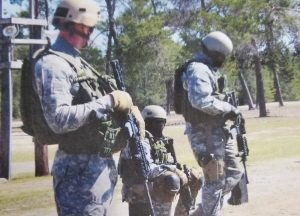 There are those rare people in life who make you feel safe. Safe in your personal space, safe in your home and community, safe in your beliefs. People like this are confident, well grounded, and are almost always powered by very profound faith. Quite often, people with these characteristics are also quiet leaders. Like shepherds.
“The Lord is my shepherd, I lack nothing.
He makes me lie down in green pastures,
he leads me beside quiet waters,
he refreshes my soul.
He guides me along the right paths
for his name’s sake.”
Psalm 23: 1-3
At a socially distanced gathering last summer, I talked with a friend about his life. I knew he was a retired combat vet. I knew that he had been to places in this world, most people wouldn’t want to visit and that he had seen and experienced things that most people should never see. With his background, I was really curious. I asked him if he had a relationship with Jesus. “Absolutely,” he boomed. When I inquired if he would mind sharing his walk with Jesus, he grinned and said,”I have lots of stories so whenever you’re ready.”
Our conversation wasn’t about military battles. It wasn’t focused on the horrors he endured as a career soldier. I thought it would, but more importantly, our talk circled around God and his glory.
Charles Spurgeon wrote that Psalm 23 “has charmed more griefs to rest than all the philosophy of the world.” Notice the choice of words King David used in the first verse, “The Lord is MY shepherd…” God is our personal shepherd, our guide, our protector, provider, and caregiver.
My neighbor grew up in pre-civil rights Alabama. His family’s faith gave him the strength, hope, and character he would need to help endure the active racism that was so prevalent. It also shaped him. He was incredibly close with his Grandmother. She was like a second mother. One night when he was supposed to spend the night at her house, something came up and he stayed home. That night, there was a gas leak in his Grandmother’s home and she tragically died from asphyxiation from Carbon Monoxide. He was visibly shaken as he told the story. Based on his body language and the rest of our conversation, I assumed this was one of the worst moments of his life. Despite this horrific loss, he somberly admitted, “God was watching me. I was supposed to be there.” His Shepherd was watching him.
With God, we might not have everything we want, but we do have everything we need. He provides. He gives us the peace and safety of green pastures. “I shall not want,” represents two cornerstone viewpoints Christians should hold. It’s saying that all of our needs are already met by God, and it’s declaring that I don’t need anything else other than what God already gives to me.
“He guides me along the right paths for his namesake.” God is the ultimate leader. We know where and who our shepherd is but we don’t know which paths are the right paths. The right paths mean safety, comfort, and making the right decisions in God’s eyes. When we trust in him, as a shepherd, he guides us there. He restores us. He points us towards him.
My friend continued to unveil his faith journey with me. He described his first deployment to a war-torn third world country where electricity and sanitation were luxuries. He and a another solider were returning from a conflict zone. Their responsibility was to get a fully loaded fuel truck back to their forward operating base (FOB) that night. Remember, this wasn’t Kansas. The roads were not flat and straight. Transporting a truck loaded with fuel any time is risky. Doing this at night in an area of combat with people who want to hurt you, is even more precarious. Suddenly, their lights shut off. It was pitch black. There was no distant light from civilization and the moon couldn’t be found. Night vision goggles feed off of some ambient light to work. There was nothing. They discovered they were alone without protection of a convoy. While my friend was behind the wheel, the soldier next to him had her gun trained out the window for bigger potential problems. Somehow, they made it to their base in one piece. “I was praying passionately the whole time,” he admitted. “I couldn’t do this to my parents. I had to return home.” He wasn’t praying deal-making prayers with God, but he said that he was praying out of fear. Eventually, it dawned on him that there was no way he could have gotten them back safely. “God did this,” he exclaimed. “He worked through me. He was driving.” Their trek back to their FOB certainly wasn’t the smoothest path, but God delivered them safely on his righteous path.
“Even though I walk
through the darkest valley,
I will fear no evil,
for you are with me;
your rod and your staff,
they comfort me.
You prepare a table before me
in the presence of my enemies.
You anoint my head with oil;
my cup overflows.”
Psalm 23:4-5
This is where the rubber meets the road, as the saying goes. It’s not the only truth to this Psalm, but it brings home the certainty of God being with us during our struggles. Even when following our shepherd, we will still walk through the darkest valleys but we will walk through them with God — not alone. Knowing God is beside us, behind us, and lifting us works to remove our fears. The rod and staff are God’s tools. One to defend us and one to steer and guide us. Despite the dangers and uncertainties that come with being surrounded by enemies, the Psalmist praises his host for his fullness, richness, and goodness. Through him, we are refreshed and renewed.
We had a large male german shepherd named Marshall. He looked intimidating if you didn’t know him. When he sensed danger, his eyes seemed to turn yellow. But if you knew Marshall, you wouldn’t feel threatened in his presence. He had a heart of gold. In no way am I saying that my friend is a teddy bear. He’s a big strong guy. But knowing his soul, I feel nothing but Christ’s presence and goodness from him. We know we’re secure when we’re with him.
After several years of service in the regular Army, my friend trained to qualify for Special Forces. He confided that he didn’t get in the first time. “It wasn’t for a lack of anything at my part,” he said. “I believed in myself, but the leadership clearly did not.” He went on to tell me how discouraging it was to him. I could see the disappointment in his eyes as he unfolded the story. He felt like he was being measured for things that had nothing to do with his ability to do impossible things in battle. Facing setbacks is part of life. We will be crushed in life, more than once. It’s not why we fail that matters, but how we handle these lessons in life that matter. Pushing through our trials shows our true character. My friend shared helpful advice his father once gave him, “God gives his hardest battles to his toughest warriors,” he proclaimed. This would have been a major turning point for many people, but not this guy. He relied heavily on his trust of God. He experienced the pain of subjective judgement. He gave his best, but it was decided that it just wasn’t good enough.
There’s a saying in the Army, “what right looks like.” My friend built on that when he declared, “God knows what right looks like.” Clearly a different standard.
“Surely your goodness and love will follow me
all the days of my life,
and I will dwell in the house of the Lord
forever.”
Psalm 23:6
The next time he tried, my friend qualified for Special Forces and served honorably for the rest of his lengthy career. My friend has been sent to places where he didn’t fit in based on outward appearance. Despite being an American soldier in hostile places, he wouldn’t let himself judge others based on things they couldn’t control. “Physical attributes alone don’t verify anyone,” he said. “We’re still perfect in God’s eyes,” he added.
I asked my friend if he had a favorite passage of scripture. Before I finished the question, he blurted out, “Psalm 23.” The meaning of this passage so brightly in him. “Goodness and mercy shall follow me” is exactly how my friend lives his life. As followers of Christ, we should also let these twin promises prop us up with confidence and hope. They will always lift us up and be available at our beckon call.
You wouldn’t know my friend is a believing Christian just by a casual conversation. Except for his passion for the Crimson Tide, he’s a quiet and private guy. He lives as Christ told us to. He and his wife regularly drive around the community and offer support to homeless people. They bring meals, clothing, and have even provided shelter for these needy folks. My friend does nothing in his life to show off his faith. He doesn’t look for approval. He doesn’t seek man’s validation. God’s validation is the only thing he seeks. He smiled as we concluded, “No general I know, outranks God.” I learned, what’s relevant to my friend is not what other people say or think of him, it’s only important what God thinks of him. Who God says he is.
Psalm 23 begins with God as our shepherd and us as sheep. It closes with us as invited guests of the most generous, loving host the world will ever know — and better yet, we’ve been invited to stay forever. The Psalmist points out that our shepherd and host is a foreshadow of our savior who would walk the earth 1,000 years later. Jesus said, “I am the good shepherd. The good shepherd lays down his life for the sheep.” (In John 10:11)
“Who the Son sets free
Oh is free indeed
I’m a child of God, yes, I am
In my Father’s house
There’s a place for me
I’m a child of God, yes, I am”
Hillsong
Key Applications:
- The Bible declares that God is our shepherd. We are his sheep. That’s not a huge compliment. Sheep can’t defend themselves. Sheep aren’t known for being really bright. Sheep are at the mercy of who is leading them. What does that say about us? In your prayers this week, ask God to guide you. Trust that he will use his rod and staff to keep us on his righteous path. Let him know he’s in charge.
- Trials and struggles are part of life. No amount of faith will stop them from coming. No amount of non-belief will keep them from coming either. So, how do we get past them? I like to remind myself that I’m not in charge. I can pretend that I am. But I’m not. Talk with a family member or friend about your struggle, try to figure how you can move ahead, and turn it over to God. Let him handle it for you.
- Read verse 6 of Psalm 23 a few times. If you’re like most people, it will give you calm. Think about why?
Where else in your life can you live out the teachings of Christ? Look for next week’s Devotion.